




Available Throughout Florida

Breach of Contract Mediation Services in Orlando, Florida

When a business relationship deteriorates into a dispute, the path to resolution matters enormously. Litigation is the default but it is rarely the best option. It is expensive, time-consuming, public, and damaging to the business relationships and internal resources that companies need to operate. Breach of contract mediation offers a faster, more confidential, and more cost-effective alternative.

Brian Gilchrist is a certified mediator based in Orlando, Florida, with extensive experience helping businesses resolve contract disputes efficiently without the disruption and expense of full litigation. His practice serves companies of all sizes, in-house legal teams, and business counsel throughout Central Florida and statewide. 

Stack of documents representing discovery costs and records in business contract litigation

When Business Disputes Become Lawsuits and Why the Costs Spiral

When a business relationship goes south, lawsuits are the natural consequence. Once a claim is filed, counterclaims almost invariably follow, and the lawsuit quickly takes a life of its own. What began as a focused dispute over a contract term or a missed payment becomes a wide-ranging proceeding involving executives, records, systems, and months of attorney time.


All-encompassing discovery demands are the norm. With the pervasive use of electronic storage in modern businesses like email systems, cloud storage, collaboration platforms, mobile devices in which e-discovery is one of the most significant cost drivers in commercial litigation today. Specialists are often required to manage data collection, processing, and review. Some litigants are forced to spend over $100,000 on electronic records searches alone, before any substantive legal issue has been addressed. 


In many business disputes, the costs of litigation quickly eclipse the value of the claim that was originally asserted. At that point, the only thing sustaining the lawsuit may be the hope of recovering attorney’s fees and costs means a hope that is uncertain at best. Both sides are spending money they may never recover, on a process that has lost any rational connection to the underlying business problem. 

Why Early Mediation Is the Smart Alternative

Confidentiality Protects Your Business and Your Reputation 

One of the most underappreciated advantages of mediation in business disputes is confidentiality. Court proceedings are public. Filings, depositions, and trial testimony can expose sensitive business information like financial terms, internal communications, supplier relationships, customer data that companies have strong incentives to protect. 

Mediation is fully confidential under Florida law. Nothing said, offered, or disclosed in mediation can be used in any subsequent legal proceeding. Companies can discuss the facts of their dispute openly in a confidential setting designed for resolution including information they would be extremely reluctant to put on the public record. Mediation also allows parties to resolve disputes privately, without being perceived as weak. A confidential settlement is just that confidential. 

Mediation Frees Your Team to Focus on Business 

Litigation does not stay in the courthouse. It follows your executives into the office, pulls your IT team off productive work and into document review, and consumes the time of finance, operations, and HR personnel who would otherwise be building the business. A dispute that drags on for two or three years which is not unusual in commercial litigation can divert enormous organizational energy away from growth and toward legal defense. 

A settled resolution returns your people to their real work. It puts your company’s technology specialists out of the litigation business and back into your business. It removes the distraction and the uncertainty that hangs over a company during active litigation and it does so on a timeline measured in weeks or months, not years. 

Compliance with Mediated Agreements Exceeds 90% 

Statistics show that compliance with mediated agreements exceeds 90% which is a significantly higher rate than compliance with court-imposed judgments. This is not a coincidence. When parties negotiate and choose the outcome themselves, they have genuine ownership of the resolution. They understand the terms, they agreed to them, and they are invested in making the agreement work. 

A mediated settlement is also far more flexible than any court judgment. Courts can award money and injunctions. Mediation can produce restructured payment arrangements, ongoing business terms, operational changes, relationship restructuring, and any other terms the parties agree are valuable creating resolutions that a judge simply cannot order.

Types of Contract Disputes Suited for Mediation

Breach of contract mediation is appropriate across virtually the full range of commercial contract disputes, including: 


  • Vendor, supplier, and service agreements 
  • Software development and technology contracts 
  • Commercial lease and real estate agreements 
  • Distribution, licensing, and franchise agreements 
  • Non-compete and non-solicitation agreements 
  • Joint venture and partnership disputes 
  • Employment contracts and executive separation agreements 
  • Construction and professional services contracts 


Mediation is appropriate whether the dispute is in pre-litigation negotiation, in active litigation, or at the eve of trial. It is particularly valuable in disputes where the parties have an ongoing business relationship worth preserving or where the cost of continued litigation has begun to outpace the value of the underlying claim. 

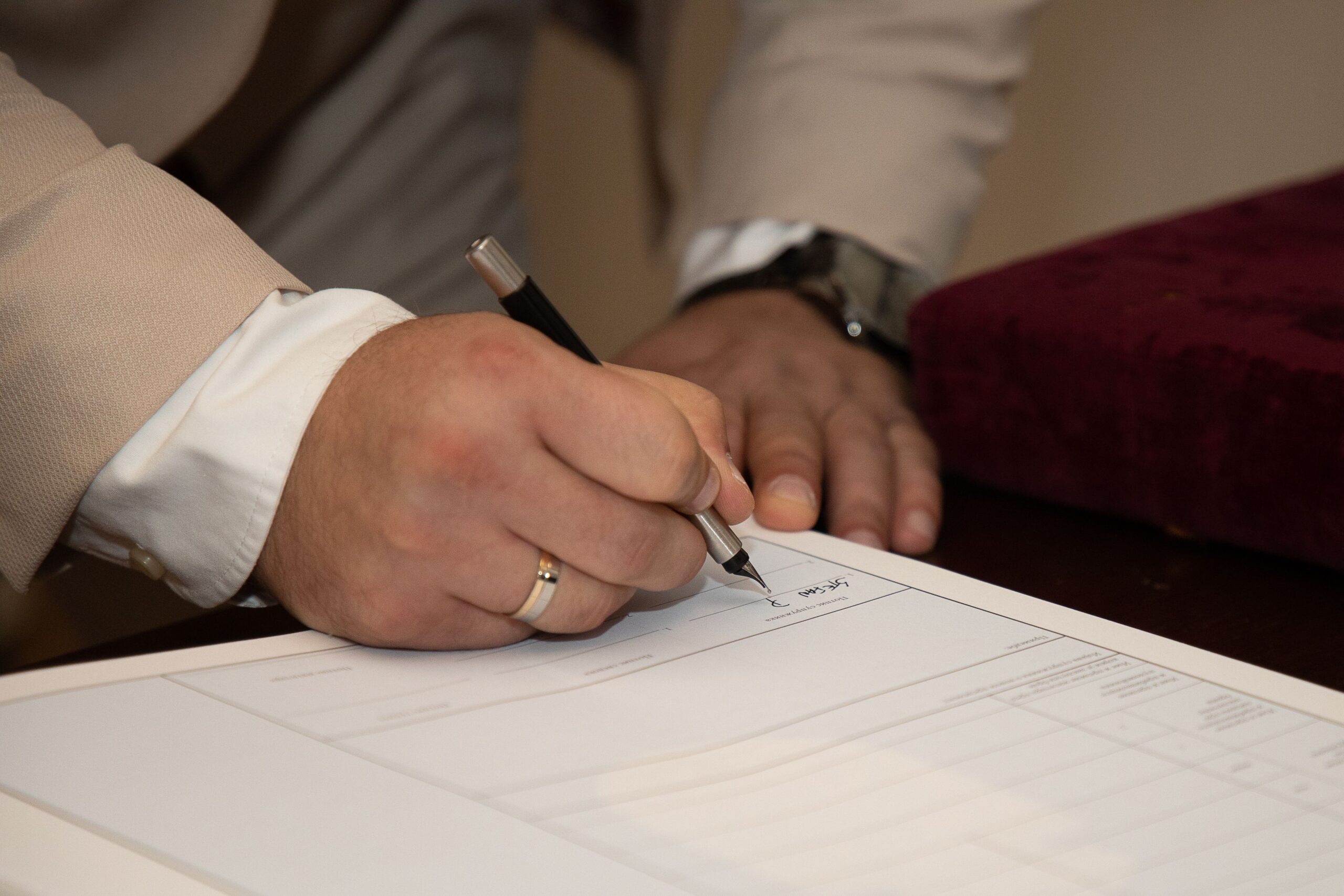
Hand signing a business contract, representing the range of commercial agreements suited for mediation

What Brian Gilchrist Brings to Business Dispute Mediation

Brian Gilchrist’s background in intellectual property litigation gives him a distinct advantage in business and contract disputes that involve proprietary assets, technology, software, trade secrets, or licensing arrangements areas where business disputes and IP disputes frequently intersect. His experience with complex discovery, technical subject matter, and sophisticated damages arguments is directly transferable to commercial contract cases of similar complexity. 


As a Florida Supreme Court Certified Circuit Civil Mediator based in Orlando, Brian brings the process skills, substantive depth, and commitment to continued engagement that complex business disputes require. He works with the parties and their counsel before the session begins, invests the time to understand the full context of the dispute, and remains engaged until the matter is fully resolved not just until the scheduled session ends. 


Schedule a consultation to discuss your contract dispute.

Serving Orlando, Central Florida, and Statewide

Brian Gilchrist’s business dispute mediation practice is based in Orlando, Florida, and serves companies, in-house counsel, and business attorneys throughout Central Florida and statewide. He regularly works with parties in Tampa, Miami, West Palm Beach, Fort Lauderdale, Sarasota, Melbourne, Fort Myers, Ocala, and Tallahassee. Dedicated location pages for these markets are coming soon. 

Whether your contract dispute involves parties in the same county or across multiple states, both in-person and remote mediation formats are available to accommodate the needs of the parties and their counsel. 

A resolved dispute lets your business move forward instead of staying tied up in litigation. Call us at 407-841-2330 or email us at bgilchrist@allendyer.com to discuss your contract dispute.

Frequently Asked Questions About Breach of Contract Mediation

Q1. Is mediation appropriate for breach of contract disputes involving large dollar amounts?

Yes, and it is often most valuable in high-dollar disputes where the cost of litigation is also high. Mediation is not limited to small claims. Large commercial disputes with damages in the hundreds of thousands or millions of dollars are frequently mediated, and the savings in litigation cost, management time, and business disruption are proportionally greater. The key is engaging a mediator with the experience to manage the complexity and the credibility to add real value to both sides’ assessment of their positions.

In mediation, the parties retain full control of the outcome no resolution is reached unless both parties agree. In arbitration, the arbitrator issues a binding ruling. Mediation is generally faster, less expensive, and more flexible than arbitration, and it allows the parties to reach outcomes that neither a judge nor an arbitrator could order. If your contract has an arbitration clause, mediation can still be used before arbitration as a lower-cost first step and many arbitration clauses specifically require good-faith mediation first.

If mediation does not produce a full resolution, the litigation continues but the session is not wasted. Parties often leave mediation with a clearer understanding of each other’s positions, a reduced scope of disputed issues, or partial agreements that narrow what remains to be tried. Many cases that do not settle on the day of mediation ultimately resolve through follow-up engagement with the mediator. An experienced mediator remains engaged after the session to continue working toward full resolution. 

Mediation is specifically suited for this purpose. Litigation is inherently adversarial and rarely leaves a business relationship intact. Mediation allows the parties to negotiate a resolution that addresses the legal dispute while also giving both sides a path forward in their relationship whether that means restructuring the contract, modifying terms, or agreeing on a clean exit. Because both parties choose the outcome, the resolution tends to produce less resentment and more genuine commitment to moving forward. 

Research consistently shows that parties comply with mediated agreements at a rate exceeding 90% which is substantially higher than compliance with court judgments, which are often contested, appealed, and subject to collection efforts. Mediated agreements are self-determined: both parties negotiated and chose the terms. When people have ownership of an outcome, they follow through on it. This makes mediation not just a faster and cheaper path to resolution, but a more durable one.

Most commercial contract mediations are conducted in a single day. Complex multi-party disputes or cases involving extensive factual records may require multiple sessions. Preparation time by the mediator varies based on the complexity of the dispute but typically begins well in advance of the session. Brian Gilchrist’s commitment does not end with the scheduled session: if the dispute is not fully resolved, he remains engaged until it is.

Get in Touch

Get expert support for intellectual property matters, including protecting innovations and trademarks.